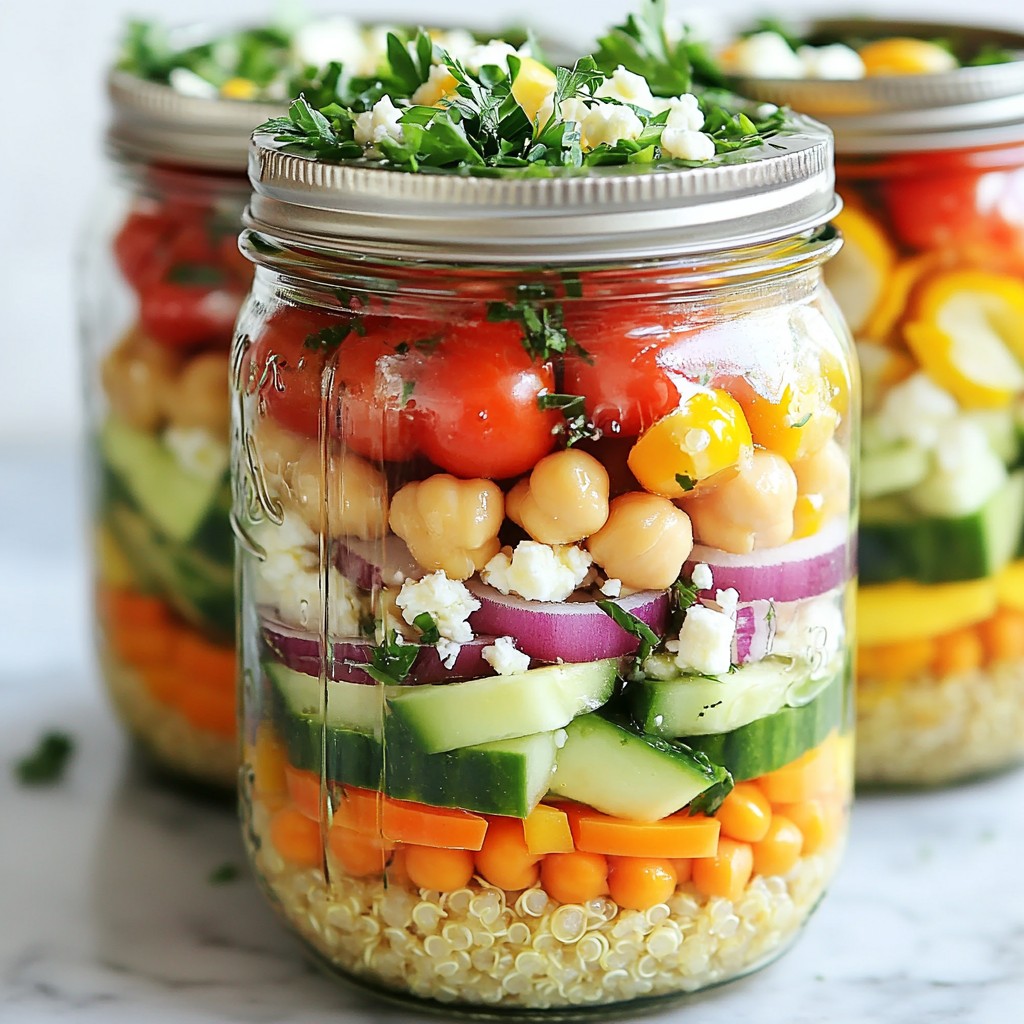
Looking to boost your meals with a tasty, high-protein option? I’ve got you covered! This High-Protein Salad Jar is not just nutritious; it’s also super easy to make. Packed with protein and vibrant ingredients, you can customize it to fit your taste. In this guide, I’ll share essential tips, ingredient choices, and step-by-step instructions for your perfect salad jar. Let’s dive in and create a nourishing meal that fuels your day!
Why I Love This Recipe
- High in Protein: This salad is packed with protein from quinoa and chickpeas, making it a filling option for any meal.
- Versatile Ingredients: You can easily customize this salad with your favorite veggies or proteins, catering to your taste preferences.
- Meal Prep Friendly: These salad jars can be prepared ahead of time and stored in the fridge, perfect for busy days.
- Vibrant and Colorful: The layering of fresh ingredients not only makes it visually appealing but also ensures a variety of flavors in every bite.
Ingredients
Required Ingredients for High-Protein Salad Jar
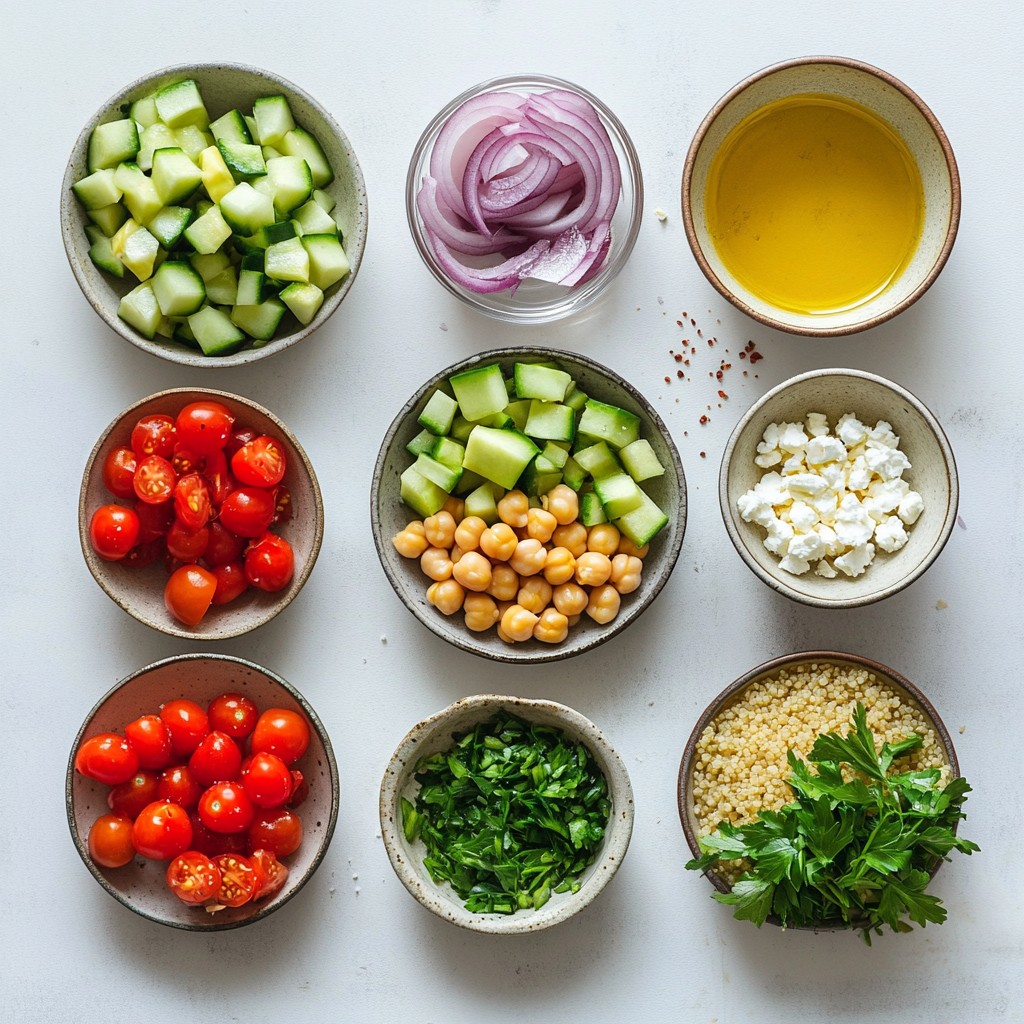
For a tasty high-protein salad jar, gather these key ingredients:
- 1 cup cooked quinoa
- 1 can (15 oz) chickpeas, rinsed and drained
- 1 cup cherry tomatoes, halved
- 1 cucumber, diced
- 1 ripe avocado, diced
- 1/2 cup feta cheese, crumbled (or a dairy-free alternative)
- 1/4 cup red onion, finely chopped
- 1/4 cup fresh parsley, chopped
- 3 tablespoons extra virgin olive oil
- 2 tablespoons fresh lemon juice
- Salt and pepper to taste
These ingredients work together to create a healthy meal. Quinoa and chickpeas provide protein. The veggies add vitamins and minerals. Feta cheese gives a creamy texture.
Optional Ingredients for Customization
You can mix and match some optional ingredients for your salad jar:
- Spinach or kale for extra greens
- Bell peppers for added crunch
- Carrots for sweetness
- Nuts or seeds for extra protein and healthy fats
- Different cheeses like goat cheese or a dairy-free alternative
These options can bring new flavors and textures to your salad. They also let you cater to your taste.
Nutritional Information for Each Ingredient
Here’s a simple breakdown of the nutrition for each main ingredient:
- Quinoa: High in protein and fiber, good for heart health.
- Chickpeas: Great source of protein and iron, aids digestion.
- Cherry Tomatoes: Rich in vitamins A and C, low in calories.
- Cucumber: Hydrating and low-calorie, adds crunch.
- Avocado: Full of healthy fats, good for skin and heart.
- Feta Cheese: Contains protein and calcium, adds creaminess.
- Red Onion: Contains antioxidants, adds flavor.
- Parsley: Offers vitamins A, C, and K, adds freshness.
- Olive Oil: Healthy fat, good for heart health.
- Lemon Juice: High in vitamin C, adds zing.
This salad jar not only nourishes you but also delights your taste buds. Each ingredient plays a role in making your meal balanced and tasty.
Step-by-Step Instructions
Preparation of the Dressing
To start, find a small mixing bowl. In it, add three tablespoons of extra virgin olive oil. Then, pour in two tablespoons of fresh lemon juice. Next, sprinkle in a pinch of salt and pepper. Whisk this mixture well. This dressing brings a bright flavor to your salad. It is light and zesty, perfect for enhancing all the ingredients.
Layering the Salad Ingredients
Now, take a clean jar or several small jars if you prefer single servings. Start by pouring the dressing at the bottom. This keeps the greens fresh. Next, add one cup of cooked quinoa. It soaks up the dressing and adds great texture.
Then, layer the rinsed chickpeas on top. They add protein and a nice bite. After that, add one cup of halved cherry tomatoes. Their sweetness brightens the jar. Follow with one diced cucumber for a crisp crunch.
Next, sprinkle finely chopped red onion for a bit of zing. After that, add half a cup of crumbled feta cheese. If you want a dairy-free option, use a dairy-free cheese.
Finally, carefully layer the diced avocado on top. This helps it stay intact. Finish with a sprinkle of fresh parsley. It adds a pop of color and freshness to your jar.
Shaking and Serving the Salad Jar
Once your jar is full, seal it tightly with a lid. When you are ready to eat, shake the jar gently. This mixes the dressing with all the salad ingredients. Each bite will be flavorful and satisfying.
For meal prep, store these jars in the fridge for up to 4-5 days. They are great for quick lunches or dinners. Just grab one, shake it, and enjoy your nutritious high-protein salad jar!
Tips & Tricks
Best Practices for Layering Ingredients
Layering is key to a great salad jar. Start with the dressing at the bottom. This keeps the greens fresh. Next, add cooked quinoa. It absorbs the dressing and adds protein. Follow with chickpeas for more protein. Then, pile on the cherry tomatoes and cucumber. These add color and crunch.
Sprinkle red onion on top for a zesty bite. Then, add crumbled feta for creaminess. Finally, place diced avocado at the top. This prevents it from getting squished. Finish with fresh parsley for a lovely touch.
Keeping Ingredients Fresh and Flavorful
To keep your salad fresh, use a tight seal on your jar. Air can wilt your greens fast. Store it in the fridge until you are ready to eat. If you want extra crunch, layer in some nuts or seeds. They can stay crunchy longer.
Adding lemon juice to the dressing helps too. It keeps ingredients bright and tasty.
Meal Prep Suggestions
Meal prepping with salad jars is smart and easy. You can make several jars in one go. Prepare them on a Sunday for the week ahead. Store them in the fridge for up to 4-5 days.
When you are ready to eat, shake the jar well. This mixes the dressing and layers together. You can also take jars to work or on trips. Just grab and go!
Pro Tips
- Use Fresh Ingredients: Fresh vegetables and herbs will enhance the flavors of your salad, making it more vibrant and delicious.
- Layer Strategically: Layering ingredients correctly will help maintain texture and freshness, especially if you’re preparing the jars in advance.
- Custom Dressings: Feel free to experiment with different dressings or add spices to the basic dressing for a unique flavor twist.
- Storage Tips: Keep the jars tightly sealed in the refrigerator to maintain freshness, and consume within 4-5 days for the best taste.
Variations
Alternative Protein Sources (e.g., chicken, tofu)
You can switch up the protein in your salad jar to keep it exciting. If you like chicken, grilled or roasted chicken works great. Just cut it into bite-sized pieces. For a plant-based option, try tofu. Firm tofu is best; press it to remove extra moisture. Then, cube it and add it right after the quinoa. Both options boost protein and add flavor.
Vegetarian and Vegan Options
If you want a vegetarian or vegan salad jar, you can easily adapt the recipe. Instead of feta cheese, use a vegan cheese or skip it altogether. You can also add more beans or lentils for extra protein. Edamame or black beans are good choices. They add texture and taste while keeping your salad full of nutrients.
Seasonal Ingredient Swaps
Using seasonal ingredients keeps your salad fresh and fun. In spring, add fresh peas or asparagus. In summer, consider adding bell peppers or zucchini. In fall, roasted sweet potatoes or apples give great flavor. Winter calls for hearty greens like kale or Brussels sprouts. Each season brings new colors and flavors to your salad jar.
Storage Info
How Long Can You Store Salad Jars?
You can store salad jars in the fridge for up to 4-5 days. This makes them great for meal prep. The layers keep the ingredients fresh. Just remember to keep the dressing at the bottom. This way, the greens stay crisp.
Best Containers for Storing Salad Jars
Choose glass or BPA-free plastic jars with tight lids. Glass jars help you see the layers. They also do not retain smells. Plastic jars are lightweight and great for on-the-go meals. Make sure they seal well to keep everything fresh.
Reheating and Serving Suggestions
These salad jars are best served cold. Shake the jar gently before eating. This mixes the dressing with the salad. If you prefer warm ingredients, you can warm the quinoa and chickpeas before layering. Just let them cool before adding to the jar. Enjoy your meal straight from the jar or pour it into a bowl for a nice presentation.
FAQs
What are the best protein sources for a salad jar?
The best protein sources for a salad jar include cooked quinoa, chickpeas, and feta cheese. You can also use chicken, tofu, or beans. These options boost protein and add flavor. For a vegetarian choice, chickpeas are great. If you want a vegan option, use tofu or beans. They all mix well with veggies too.
Can I make this salad jar in advance?
Yes! You can make this salad jar in advance. It stores well in the fridge for up to 4-5 days. Layering the ingredients helps keep them fresh. Just remember to put the dressing at the bottom. This keeps the greens crisp and tasty until you eat it.
How do I ensure my salad stays fresh?
To keep your salad fresh, follow these tips:
- Use a clean jar with a tight lid.
- Store it in the fridge.
- Layer ingredients wisely, with the dressing on the bottom.
- Avoid cutting the avocado until you are ready to eat.
These steps help maintain freshness and flavor. Enjoy your healthy meal!
This blog post explored how to build a tasty, high-protein salad jar. You learned about the ingredients needed, how to prepare the dressing, and best practices for layering. I also shared tips for keeping your salad fresh and meal prep ideas. You can customize your salad jars based on your diet, protein preferences, and seasonal ingredients. Remember, storing them right keeps them tasty longer. Enjoy creating your perfect salad jar on your own terms!